Mega-Cell (Pellets)
Mega-Cell (Pellets)
Mega-Cell (Pellets)
Mega-Cell (Pellets)
Mega-Cell (Pellets)
Mega-Cell (Pellets)
Mega-Cell (Pellets)
Mega-Cell (Pellets)
Mega-Cell (Pellets)
Mega-Cell (Pellets)
Mega-Cell (Pellets)
Mega-Cell (Pellets)
Mega-Cell (Pellets)
Mega-Cell (Pellets)
× Zoomed product image

Mega-Cell (Pellets)

☆☆☆☆☆ (48 reviews) + Write a Review

$30.50

SKU: 64960650

Mega-Cell™ (Pellet) is a well balanced multi-vitamin and mineral supplement formulated to coincide with current NRC (National research council) recommended daily requirements, to accommodate feeding programs consisting of grass type hays (timothy, coastal, bermuda, native grass) and grain based diets. The addition... Read More

Size:

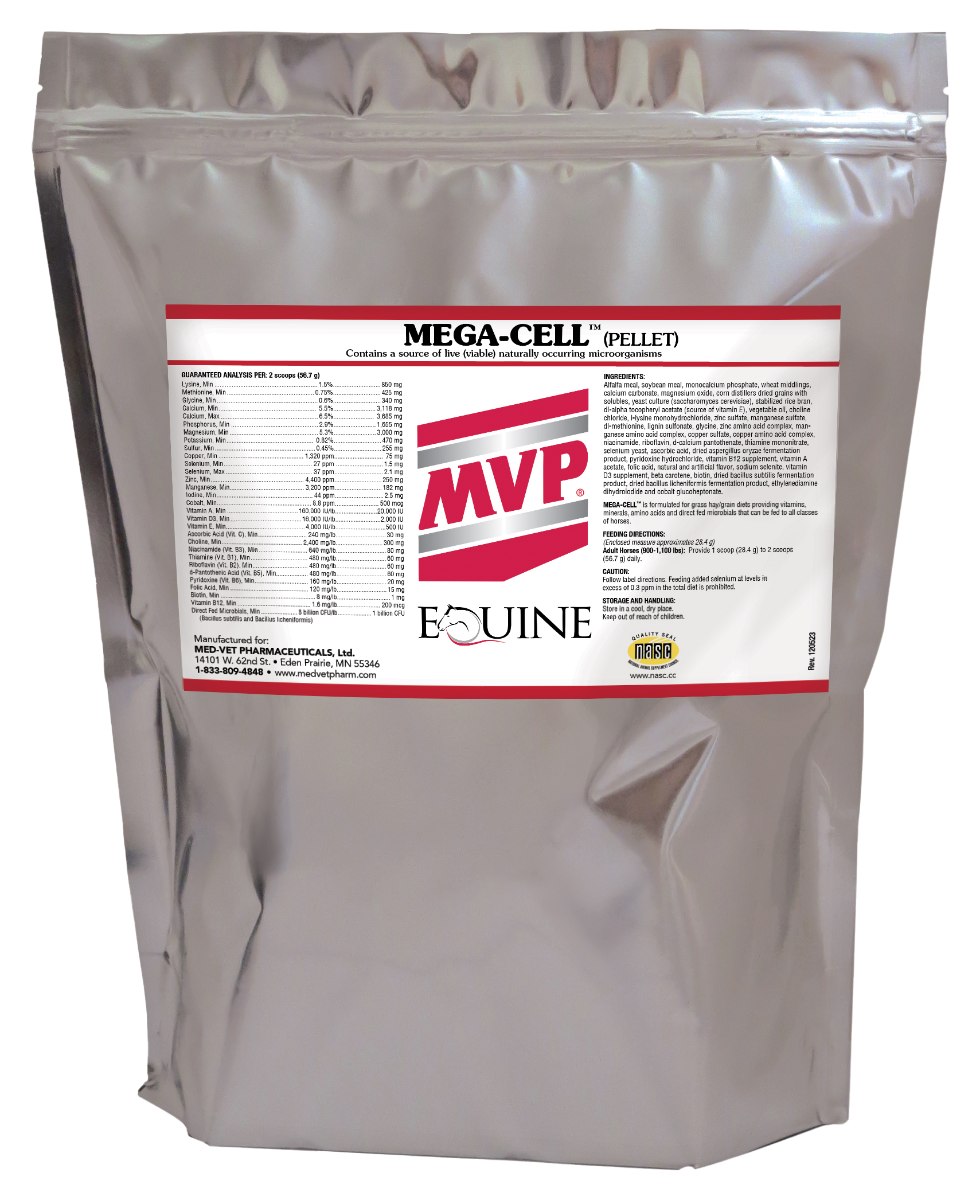
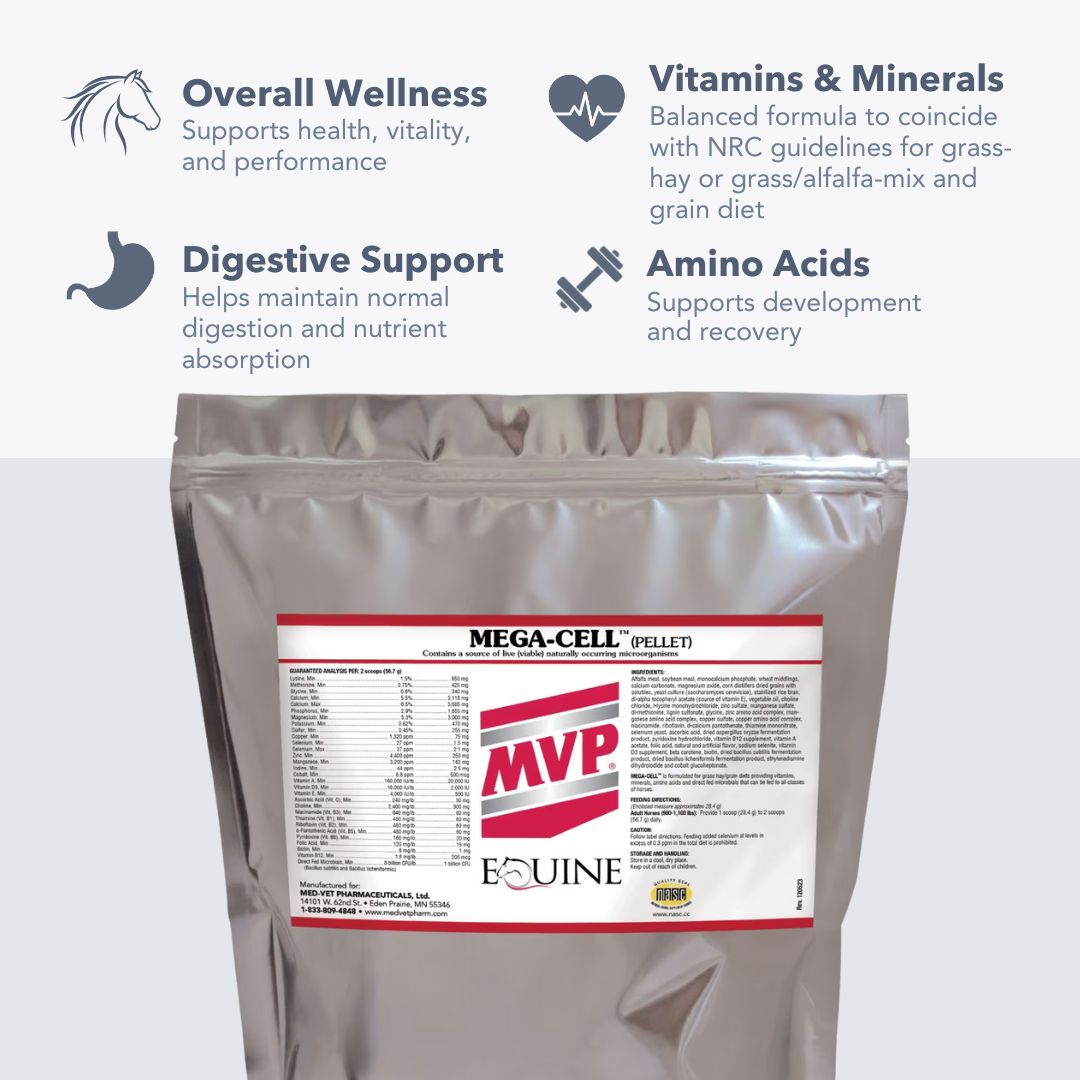
Mega-Cell™ (Pellet) is a well balanced multi-vitamin and mineral supplement formulated to coincide with current NRC (National research council) recommended daily requirements, to accommodate feeding programs consisting of grass type hays (timothy, coastal, bermuda, native grass) and grain based diets. The addition of live, stabilized direct fed microbials, live cell yeast culture and amino-acid content, sourced from alfalfa meal, rice bran and soybean meal makes Mega-Cell™ an excellent choice to support growth, stamina, conditioning and maximum performance for all discipline.


  • Vitamins
  • Minerals
  • Amino Acids
  • Direct Fed Microbials


For a vitamin/mineral supplement for primarily Alfalfa Hay/Grain based diets see Mega-Mag

Mega-Cell (Pellets)

Biotin is a member of the B vitamins family and, like some other vitamins, is a coenzyme for several metabolic pathways. It is involved in glucose metabolism, growth and utilization of niacin. Biotin helps aid in the growth of strong, healthy hooves due to its role in collagen formation. A number of research studies show that long-term, daily supplementation of 10-30 mg of biotin daily may help improve growth rate and hardness of hooves, especially in horses with less than optimum quality hoof horn (soft, brittle, chipped).

Calcium is a micromineral found in highest amounts in bone and teeth. However, it also has important roles in supporting muscle contraction, cell membranes, blood clotting, enzymes regulation, and hormone release. Absorption of calcium from the small intestine is controlled by vitamin D but can be reduced if there is too much phosphorus in the diet. Ideally, horses should receive slightly more calcium than phosphorus – a ratio between 1:1 and 2:1. Pregnant and lactating mares, growing horses, and exercising horses may need more dietary calcium than an adult horse at rest.

Choline is recommended for supporting a healthy nervous system. Choline is a component of acetylcholine, a neurotransmitter. Acetylcholine carries messages between neurons, which enables the brain to communicate with itself and the rest of the body. 

Cobalt (Co) is a micromineral used by intestinal microorganisms to produce vitamin B12, which works with iron and copper to form healthy red blood cells.

Copper (Cu) is a micromineral that aids in the production of normal connective tissues including tendons, ligaments, cartilage and bone. As a component of many enzyme systems, it is also involved in making iron available to the body for blood, in producing skin and coat pigments, in proper nerve signaling and in repairing antioxidants.
Iodine is aids in reproduction and normal physiological function in the horse. This is due to the important role that it plays in natural thyroid metabolism and in the synthesis of the thyroid hormones triiodothyronine and thyroxine. These hormones fulfill multiple functions ranging from healthy cell regulation to tissue differentiation and growth.

Glycine is one of the simplest amino acids and is classified as nonessential because it does not need to be supplied in the diet. However, this compact substance plays many essential roles in the body. Glycine makes up 35% of the protein collagen, is a key component in many metabolic reactions, and has a modulating effect on the immune system. It has also been shown to help promote a balanced digestive system

Iodine is aids in reproduction and normal physiological function in the horse. This is due to the important role that it plays in natural thyroid metabolism and in the synthesis of the thyroid hormones triiodothyronine and thyroxine. These hormones fulfill multiple functions ranging from healthy cell regulation to tissue differentiation and growth.

Lysine is an amino acid and the only one for which a requirement in the horse has been established by the NRC and used for the biosynthesis of proteins. This amino acid is often the key to improving protein availability and healthy muscle function.

Magnesium (Mg) is a macro mineral that is frequently recommended for a wide range of equine health conditions. Magnesium helps to maintain normal muscle and nerve function, a healthy heart, healthy immune system and strong bones. Magnesium aids to regulate blood sugar levels, promotes normal blood pressure, and known to be involved in energy metabolism and protein synthesis. Since a symptom of magnesium deficiency is agitation or anxiety, it is included in many calming supplements.

Manganese is a micromineral that aids in bone formation, growth and reproduction. It also supports carbohydrate and fat metabolism. Supplementation should be considered because not all diets provide the same levels of manganese. It plays an important role in young growing horses as well as active performance horses.

Methionine is an amino acid that must be provided in the diet since the body cannot create enough of its own. This means if it is not present in adequate amounts it limits the body's ability to make protein. Methionine can be converted by the body into another sulfur-containing amino acid, cysteine. Because the concentration of both these amino acids is highest in hoof and hair, methionine is often included in hoof health supplements. 

Phosphorus is a macromineral that, like Calcium, is found in highest amounts in bone. It is also required for energy production and the synthesis of many vital compounds such as DNA. The minerals calcium (Ca) and phosphorous (P) play a major role in proper growth and development of the skeletal system in horses. Ideally, horses should receive slightly more calcium than phosphorus – a ratio between 1:1 and 2:1.
Potassium (K) is a macromineral commonly referred to as an electrolyte to help support proper muscle function. It helps maintain the body's acid/base balance and hydration status. Muscle weakness, fatigue, and exercise intolerance are likely when potassium deficiency is present.

Potassium (K) is a macromineral commonly referred to as an electrolyte to help support proper muscle function. It helps maintain the body's acid/base balance and hydration status. Muscle weakness, fatigue, and exercise intolerance are likely when potassium deficiency is present.

Probiotics are live microorganisms (bacteria and yeast) that help promote healthy digestive function and support a healthy immune system. Often referred to as ‘good bugs’ they help break down ingredients/contents that the body normally can't, and help inhibit ‘bad bugs’ from growing.

Selenium is a trace mineral that along with vitamin E function together to help to protect body tissues from free radical damage that occurs during oxidation (the conversion of feedstuffs into energy). While some parts of the country have high levels of selenium in their soil and therefore the plants that grow there, selenium deficiency is not uncommon and reported in many states. Therefore, most horses may require supplementation to meet the NRC requirement of 1-3 mg/day, depending on activity level. *NRC upper safe limit approx. 20 mg/day in total diet.

Sulfur is a macromineral found in certain amino acids (methionine and cysteine), as well as the B vitamins biotin and thiamin and a number of other important molecules such as insulin, taurine, and chondroitin sulfate. Sulfur serves major structure and function roles in the body and is a component of proteins such as enzymes and connective tissue such as hooves, bones, cartilage, tendons and ligaments. 

Thiamine (Vitamin B1) plays a role in supporting carbohydrate metabolism and normal muscle and nerve function. Thiamine supplementation has been shown to have a calming effect in horses displaying anxious/nervous behavior as a result thiamine deficiency and/or increased requirements.

The Vitamin B family is made up of several compounds that support many important roles in the body: protein, fat and carbohydrate metabolism; energy production; proper nerve cell transmission, reproduction, and division (especially rapidly dividing ones such as red blood cells). B vitamins include thiamine (B1), riboflavin (B2), niacin (B3), pantothenic acid (B5), pyridoxine (B6), folic acid (B9), cyanocobalamin (B12), choline, biotin, inositol and others are sometimes referred to as B-vitamins. For most of the B-vitamins, microorganisms in the large intestine make all the horse needs. Only thiamine and riboflavin have NRC dietary requirements. However, research suggests B-vitamin supplementation may be beneficial to horses with little access to fresh pasture and/or during any periods of stress (training, injury, travel, etc.)

Vitamin A is well known for its role in supporting healthy vision, immune function, and skin/coat. However, it is also needed for respiratory health, reproduction, soft tissue and normal skeletal development in young growing horses and exercising horses that are remodeling bone.

Vitamin C (Ascorbic Acid) is an antioxidant that plays a role in helping combat harmful free radicals. Vitamin C is an antioxidant that helps protect the tissues of the body and also important in the production of connective tissues like tendons and ligaments.

Vitamin D (Calciferol) plays an indirect role in bone growth and maintenance by managing the levels of calcium (Ca) in the body. It assists in the absorption of Ca from the intestine, the movement of Ca into and out of bone, and the amount of Ca excreted by the kidneys.

Vitamin E is considered the most important antioxidant and works closely with selenium to protect the body from the oxidative stress of exercise and illness. Found in high amounts in fresh pasture, levels begin to decay the moment pasture is cut for hay. That is why any horse that does not have access to grass, regardless of its activity level or health, would be a candidate for vitamin E supplementation. Horses are not very efficient in storing vitamin E and deficiency may be accelerated if the diet is deficient in selenium

 Zinc (Zn) is a micromineral involved in over 100 enzyme systems ranging from support of connective tissue formation and antioxidants to carbohydrate metabolism and immune system function. It is most recognized for its role in healthy skin and hooves.

My horse is fed both Alfalfa and Grass Hays which formula Mega-Cell or Mega-Mag should I feed?

MVP:  Mega-Cell supplement is formulated to accommodate a feeding program consisting primarily of grass type hays (timothy, coastal, bermuda, etc.). While Mega-Mag accommodates a feeding program consisting primarily of Alfalfa Hay.  Both are well balanced multi-vitamin and mineral supplements and the formula that you choose should coincide with which type of hay is given in higher quantity.

I have a 5 year old gelding who was just started on a half of scoop of grain he hasn’t had grain in a while would it be safe to add this to her diet?? He also gets grass hay.

MVP: Mega-Cell is a multi-vitamin product to help fill in the gaps for horses in light work who aren’t receiving a full serving of grain. This may be a good option to help ensure your gelding receives everything he needs for optimal health if he is not receiving a full grain ration according to the feeding instructions for the grain you are giving. If you have any particular concerns, we'd recommend checking in with your veterinarian.

Mega-Cell™ (Pellet) is a well balanced multi-vitamin and mineral supplement formulated to coincide with current NRC (National research council) recommended daily requirements, to accommodate feeding programs consisting of grass type hays (timothy, coastal, bermuda, native grass) and grain based diets. The addition of live, stabilized direct fed microbials, live cell yeast culture and amino-acid content, sourced from alfalfa meal, rice bran and soybean meal makes Mega-Cell™ an excellent choice to support growth, stamina, conditioning and maximum performance for all discipline.


  • Vitamins
  • Minerals
  • Amino Acids
  • Direct Fed Microbials


For a vitamin/mineral supplement for primarily Alfalfa Hay/Grain based diets see Mega-Mag

Biotin is a member of the B vitamins family and, like some other vitamins, is a coenzyme for several metabolic pathways. It is involved in glucose metabolism, growth and utilization of niacin. Biotin helps aid in the growth of strong, healthy hooves due to its role in collagen formation. A number of research studies show that long-term, daily supplementation of 10-30 mg of biotin daily may help improve growth rate and hardness of hooves, especially in horses with less than optimum quality hoof horn (soft, brittle, chipped).

Calcium is a micromineral found in highest amounts in bone and teeth. However, it also has important roles in supporting muscle contraction, cell membranes, blood clotting, enzymes regulation, and hormone release. Absorption of calcium from the small intestine is controlled by vitamin D but can be reduced if there is too much phosphorus in the diet. Ideally, horses should receive slightly more calcium than phosphorus – a ratio between 1:1 and 2:1. Pregnant and lactating mares, growing horses, and exercising horses may need more dietary calcium than an adult horse at rest.

Choline is recommended for supporting a healthy nervous system. Choline is a component of acetylcholine, a neurotransmitter. Acetylcholine carries messages between neurons, which enables the brain to communicate with itself and the rest of the body. 

Cobalt (Co) is a micromineral used by intestinal microorganisms to produce vitamin B12, which works with iron and copper to form healthy red blood cells.

Copper (Cu) is a micromineral that aids in the production of normal connective tissues including tendons, ligaments, cartilage and bone. As a component of many enzyme systems, it is also involved in making iron available to the body for blood, in producing skin and coat pigments, in proper nerve signaling and in repairing antioxidants.
Iodine is aids in reproduction and normal physiological function in the horse. This is due to the important role that it plays in natural thyroid metabolism and in the synthesis of the thyroid hormones triiodothyronine and thyroxine. These hormones fulfill multiple functions ranging from healthy cell regulation to tissue differentiation and growth.

Glycine is one of the simplest amino acids and is classified as nonessential because it does not need to be supplied in the diet. However, this compact substance plays many essential roles in the body. Glycine makes up 35% of the protein collagen, is a key component in many metabolic reactions, and has a modulating effect on the immune system. It has also been shown to help promote a balanced digestive system

Iodine is aids in reproduction and normal physiological function in the horse. This is due to the important role that it plays in natural thyroid metabolism and in the synthesis of the thyroid hormones triiodothyronine and thyroxine. These hormones fulfill multiple functions ranging from healthy cell regulation to tissue differentiation and growth.

Lysine is an amino acid and the only one for which a requirement in the horse has been established by the NRC and used for the biosynthesis of proteins. This amino acid is often the key to improving protein availability and healthy muscle function.

Magnesium (Mg) is a macro mineral that is frequently recommended for a wide range of equine health conditions. Magnesium helps to maintain normal muscle and nerve function, a healthy heart, healthy immune system and strong bones. Magnesium aids to regulate blood sugar levels, promotes normal blood pressure, and known to be involved in energy metabolism and protein synthesis. Since a symptom of magnesium deficiency is agitation or anxiety, it is included in many calming supplements.

Manganese is a micromineral that aids in bone formation, growth and reproduction. It also supports carbohydrate and fat metabolism. Supplementation should be considered because not all diets provide the same levels of manganese. It plays an important role in young growing horses as well as active performance horses.

Methionine is an amino acid that must be provided in the diet since the body cannot create enough of its own. This means if it is not present in adequate amounts it limits the body's ability to make protein. Methionine can be converted by the body into another sulfur-containing amino acid, cysteine. Because the concentration of both these amino acids is highest in hoof and hair, methionine is often included in hoof health supplements. 

Phosphorus is a macromineral that, like Calcium, is found in highest amounts in bone. It is also required for energy production and the synthesis of many vital compounds such as DNA. The minerals calcium (Ca) and phosphorous (P) play a major role in proper growth and development of the skeletal system in horses. Ideally, horses should receive slightly more calcium than phosphorus – a ratio between 1:1 and 2:1.
Potassium (K) is a macromineral commonly referred to as an electrolyte to help support proper muscle function. It helps maintain the body's acid/base balance and hydration status. Muscle weakness, fatigue, and exercise intolerance are likely when potassium deficiency is present.

Potassium (K) is a macromineral commonly referred to as an electrolyte to help support proper muscle function. It helps maintain the body's acid/base balance and hydration status. Muscle weakness, fatigue, and exercise intolerance are likely when potassium deficiency is present.

Probiotics are live microorganisms (bacteria and yeast) that help promote healthy digestive function and support a healthy immune system. Often referred to as ‘good bugs’ they help break down ingredients/contents that the body normally can't, and help inhibit ‘bad bugs’ from growing.

Selenium is a trace mineral that along with vitamin E function together to help to protect body tissues from free radical damage that occurs during oxidation (the conversion of feedstuffs into energy). While some parts of the country have high levels of selenium in their soil and therefore the plants that grow there, selenium deficiency is not uncommon and reported in many states. Therefore, most horses may require supplementation to meet the NRC requirement of 1-3 mg/day, depending on activity level. *NRC upper safe limit approx. 20 mg/day in total diet.

Sulfur is a macromineral found in certain amino acids (methionine and cysteine), as well as the B vitamins biotin and thiamin and a number of other important molecules such as insulin, taurine, and chondroitin sulfate. Sulfur serves major structure and function roles in the body and is a component of proteins such as enzymes and connective tissue such as hooves, bones, cartilage, tendons and ligaments. 

Thiamine (Vitamin B1) plays a role in supporting carbohydrate metabolism and normal muscle and nerve function. Thiamine supplementation has been shown to have a calming effect in horses displaying anxious/nervous behavior as a result thiamine deficiency and/or increased requirements.

The Vitamin B family is made up of several compounds that support many important roles in the body: protein, fat and carbohydrate metabolism; energy production; proper nerve cell transmission, reproduction, and division (especially rapidly dividing ones such as red blood cells). B vitamins include thiamine (B1), riboflavin (B2), niacin (B3), pantothenic acid (B5), pyridoxine (B6), folic acid (B9), cyanocobalamin (B12), choline, biotin, inositol and others are sometimes referred to as B-vitamins. For most of the B-vitamins, microorganisms in the large intestine make all the horse needs. Only thiamine and riboflavin have NRC dietary requirements. However, research suggests B-vitamin supplementation may be beneficial to horses with little access to fresh pasture and/or during any periods of stress (training, injury, travel, etc.)

Vitamin A is well known for its role in supporting healthy vision, immune function, and skin/coat. However, it is also needed for respiratory health, reproduction, soft tissue and normal skeletal development in young growing horses and exercising horses that are remodeling bone.

Vitamin C (Ascorbic Acid) is an antioxidant that plays a role in helping combat harmful free radicals. Vitamin C is an antioxidant that helps protect the tissues of the body and also important in the production of connective tissues like tendons and ligaments.

Vitamin D (Calciferol) plays an indirect role in bone growth and maintenance by managing the levels of calcium (Ca) in the body. It assists in the absorption of Ca from the intestine, the movement of Ca into and out of bone, and the amount of Ca excreted by the kidneys.

Vitamin E is considered the most important antioxidant and works closely with selenium to protect the body from the oxidative stress of exercise and illness. Found in high amounts in fresh pasture, levels begin to decay the moment pasture is cut for hay. That is why any horse that does not have access to grass, regardless of its activity level or health, would be a candidate for vitamin E supplementation. Horses are not very efficient in storing vitamin E and deficiency may be accelerated if the diet is deficient in selenium

 Zinc (Zn) is a micromineral involved in over 100 enzyme systems ranging from support of connective tissue formation and antioxidants to carbohydrate metabolism and immune system function. It is most recognized for its role in healthy skin and hooves.
My horse is fed both Alfalfa and Grass Hays which formula Mega-Cell or Mega-Mag should I feed?

MVP:  Mega-Cell supplement is formulated to accommodate a feeding program consisting primarily of grass type hays (timothy, coastal, bermuda, etc.). While Mega-Mag accommodates a feeding program consisting primarily of Alfalfa Hay.  Both are well balanced multi-vitamin and mineral supplements and the formula that you choose should coincide with which type of hay is given in higher quantity.

I have a 5 year old gelding who was just started on a half of scoop of grain he hasn’t had grain in a while would it be safe to add this to her diet?? He also gets grass hay.

MVP: Mega-Cell is a multi-vitamin product to help fill in the gaps for horses in light work who aren’t receiving a full serving of grain. This may be a good option to help ensure your gelding receives everything he needs for optimal health if he is not receiving a full grain ration according to the feeding instructions for the grain you are giving. If you have any particular concerns, we'd recommend checking in with your veterinarian.

  • 5 stars: 45 (94%)
  • 4 stars: 2 (4%)
  • 3 stars: 0 (0%)
  • 2 stars: 1 (2%)
  • 1 star: 0 (0%)
D
Deb
Mega cell

This product is excellent. We have 6 horses on it. It is a quality product at a reasonable price. Our horses are thriving on it. We have a 29 year old and we had a 38 year old on it. Always arrives fast!

H
Heidi Anderson
Review of...

I began feeding Mega Cell the beginning of Dec. I feed this so my horses receive all of the essential vitamins they are missing in their forage diet thru the winter months here in Wisconsin.

R
Rachel Bromen
Happy with the supplement so far.

Happy with the supplement so far.

J
Jody Brown
Good...

Our 3 year olds do well on these.

S
Shelby T
Mega-Cell (Pellets)

Mega-Cell (Pellets)

L
Linda C
Mega Cell Pellets

I have been using this product for a couple of years now, and find it helps our gelding stay healthy and active at 20 years old. Since he was diagnosed with Equine Metabolic Disorder a few years ago, we have been soaking his hay daily to remove the sugars. To ensure that he is still getting the vitamins he needs to stay healthy, we began supplementing with Mega Cell. Since he is doing very well and showing no signs of EMD, we think the combination of hay soaking and supplementing has paid off.

D
Douglas J. Ringler
Love the product, hate the...

You used to be able to deliver via UPS. Now, not. I will go elsewhere for product. Up here in Maine, UPS is the best company. I won't comment on what you have chosen now as your sole delivery agent. But, UPS is the best. I won't order from you any longer. As an equine veterinarian, we need a good delivery company. Period. Your selection is not that.

N
Nancy Rosen
MVP Mega Cell pellets

We are a small not for profit 501c3 and we have been using this product for years. We are a therapeutic riding program, we also take neglected and abused horses and integrate them into our program. We feed primarily forage and add grain as needed. Every horse and donkey gets the mineral and vitamin product from MVP and they are all thriving. It is very palatable and none of our animals turn it down.
www.horsesforachange.org

C
Catherine Vaughn
Mega cell

This mineral and vitamin supplement is a great source to balance what is not in their hay. Helps my geldings hoofs also.

K
Kay Schmidt
Great...

I have been feeding Mega-Cell to my horses for the last 10 years and have had excellent results. Happy healthy horses has been the result.

J
JAYE LAUGHLIN
Great for easy keepers and...

This is a great supplement for easy keepers and donkeys that can't handle the extra calories of even a ration balancer. I've been using Mega Cell for over a decade and have no plans to ever change. Mega Cell is also one of the few vitamin/mineral supplements that has NO ADDED IRON--a plus for the metabolically challenged equine.

C
Chris H.
Mega-Cell Pellets

It’s a really good supplement! Adding Mega-Cell to our daily was a plus.

V
Vixen Radford
Came quickly and was great!

Came quickly and was great!

C
Chris Herrera
Mega Cell pellets

Very Happy!!

C
Chris Herrera
Mega-Cell...

So far I am happy with it. All 4 head clean it up and seem to be doing good on it.

D
Danielle Sego
Wonderful...

Works great horses love it

H
HEIDI OCONNOR
Excellent...

I've been using Mega-Cell for decades on a variety of horses, always with excellent results.

J
Jeanene Arrington
Happy Healthy...

When I rescued 2 Senior Paso Fino's last year they were on Mega-cell so I checked the product out and now all 4 of my horses take. They are happy, healthy, and have lovely coats. They are on pasture 24/7 but grasses in Florida tend to not have a lot of nutrition. I have seen an am improvement and will keep them on Mega-cell!

H
HEIDI OCONNOR
Excellent...

I've been using Mega-Cell pellets for years on many different horses, and always with excellent results. By using the right supplement, you can save on feed costs!

A
Amanda Hawkins
Palatable and...

Easy to feed pellets although my gelding eats everything he sees. So far I think I can tell a weight difference. Will continue to use up the bag and hopefully be a continuing user.

R
Roxie Carpenter
Great...

As always MVP has done great for my horses, I love Mega-Cell since all you need for your horse is in that one tiny little scoop once are twice a day, how ever you choose..

S
Samantha Swanson
Mega-Cell (Pellets)

Mega-Cell (Pellets)

L
Lana Barkman
Love the Mega-Cell!

Great vitamin and mineral source for our horses on grass hay and/or pasture! Highly palatable, and love that it comes in a pellet form.

L
LANA BARKMAN
Love the Mega-Cell Product!

Great vitamin and mineral source for our horses on grass hay and/or pasture! Highly palatable, and love that it comes in a pellet form.

L
Linda Cox
Mega-Cell (Pellets)

To keep excess weight off my Arabian gelding, yet give him enough to eat so he isn't starving all the time, we soak his grass hay before each feeding. Because we are not only depleting any carbs/sugars, but the vitamins as well, we started using Mega-Cell. He has been on it at least a year or two now, and we find it easier to control his weight yet give him the vitamins he needs. Our Vet even commented on how good he looked from the previous year, and we attribute it to supplementing with Mega Cell

B
Brianna
Mega cell

My family has fed this to our Morgans for the last 10 + years. Our picky horses and non picky horses eat it. There coats look great and over all appearance is wonderful on this product. Other powdered vitamin/ mineral supplements cake there feed bowls and end up gross. Fan for life.

J
JAYE LAUGHLIN
Mega Cell 50 lb

I have been using Mega Cell for over a decade. I use this for my entire outside herd--costs me $1 a day to supplement 2 horses, 2 mini donks, 1 hinny, and 1 llama. A 50 lb. bag lasts me 200 days; love that it has no added iron, love that the serving size is so small. All the above animals have done great on it (including 2 that need blood sugar support) and eat it right up when added to a small amount of hay pellets.

R
Rafael
Mega Cell

It's the perfect mineral supplement for horses that have weight management issues or are overweight & are on mostly pasture. I can control their weight without having to use much feed

A
Amber
Love Mega Cell!

Mega Cell is great! I love knowing my horses are getting all the necessary vitamins and minerals they need. All of my horses look amazing!

T
Taylor
Amazing stuff!

Mega Cell gives my horses the vitamins and minerals they are lacking, they look amazing and feel amazing as well

V
Val
Best Supplement !!!!

Been feeding this for years. My horses are dappled and look like pictures of health...Thanks top Mega Cell

C
Csmom
Great stuff!!!

My mare is on a forage only diet (Timothy/orchard) and I’ve always supplemented with a vitamin/mineral product to make sure she gets everything she needs. I’ve tried 2 other ’’top brands’’ that were pretty pricey and believe it or not, LACKED certain vitamins/minerals (according to FeedXL.com). But this one, Mega Cell, is IT! Everything my horse needs and her diet is balanced. Her hooves are great, her coat is dappled out and she is healthy. I will keep her on this forever. I mix it in with her hay pellets and she eats it right up. Very affordable too! Love it!

I
IG
Excellent

I wanted to find a vitamin/mineral supplement without iron. This is it! Compared to the more expensive brand of vit/min supplements out there, this is a very good alternative. My horses eat it right up and they do indeed look healthy. I’m sticking with this one for sure.