
TL;DR
- Horse hoof abscess represents the most common reason for non-weight-bearing lameness in horses.
- Common signs of an abscess in a horse’s hoof include sudden, severe pain, lameness, increased digital pulse, heat in the hoof, and sensitivity to hoof testers.
- Hoof abscesses in horses develop when bacteria enter through cracks, puncture wounds, white line separations, or sole bruises, causing infection and pressure buildup.
- Care involves locating and draining the abscess, soaking in Epsom salt, applying a protective wrap, and managing pain.
Horse Hoof Abscess: An Overview
A hoof abscess is one of the most common causes of sudden, acute lameness in horses and is a leading reason for non-weight-bearing lameness. It develops when infection becomes trapped within the hoof, building pressure and causing intense pain, which is why the horse may suddenly refuse to bear weight on the affected leg.
Despite how dramatic the lameness appears, most horse hoof abscesses respond very well to prompt care. Therefore, it is important to be aware of the various methods by which a hoof abscess in horses can be managed to act accordingly in the event of a horse experiencing severe lameness.
Today, we will discuss the signs, causes, and supportive care approaches for this horse hoof health problem.
What Is a Horse Hoof Abscess?
A horse hoof abscess is a bacterial infection that occurs within the sensitive tissues of the hoof, also referred to as septic pododermatitis or subsolar abscess. The bacteria enter the tissues through damaged areas of the hoof wall, multiply inside the confined area, and result in the formation of pus that accumulates enough pressure.
The hard hoof wall does not allow the pus to expand, creating intense pain from the pressure exerted on the sensitive laminae and nerves. These conditions are mostly found in the sole, white line area, or the frog of the hoof; however, some may ascend to the coronary band, where they rupture.
Even though they have a very dramatic effect of causing three-legged lameness, which fearfully shakes the horse owner, hoof abscesses do not usually lead to lasting discomfort. Once a qualified professional addresses pressure inside the hoof, the horse may return to normal comfort and mobility within less than a week in the case of a mild infection. Severe or deep infections may take slightly longer.
Signs and Symptoms of an Abscess in a Horse’s Hoof
Here are some signs of an abscess in a horse’s hooves:
Acute Symptoms
Initial signs of hoof abscesses manifest abruptly and dramatically:
- Acute onset of lameness, which can be sudden enough to occur overnight.
- Avoidance of weight-bearing activities on the affected lower extremities.
- Reluctance or complete refusal to move forward.
- Increased digital pulse in the involved foot due to a bounding pulse.
- Heat in the hoof wall and the coronary band region.
- Positive reaction to hoof testers, which identify the painful spot.
- Limb swelling above the hoof in some cases.
As Abscess Progresses
While the infection is moving towards resolution, these symptoms are manifested:
- Drainage at the coronary band if the abscess migrates upward (called gravel).
- Draining through the sole or frog after the abscess ruptures will take place naturally.
- Black, pungent discharge suggestive of infection release.
- Rapid resolution of lameness symptoms when drainage commences.
- Visible soft spot or opening in the hoof when the abscess surfaces.
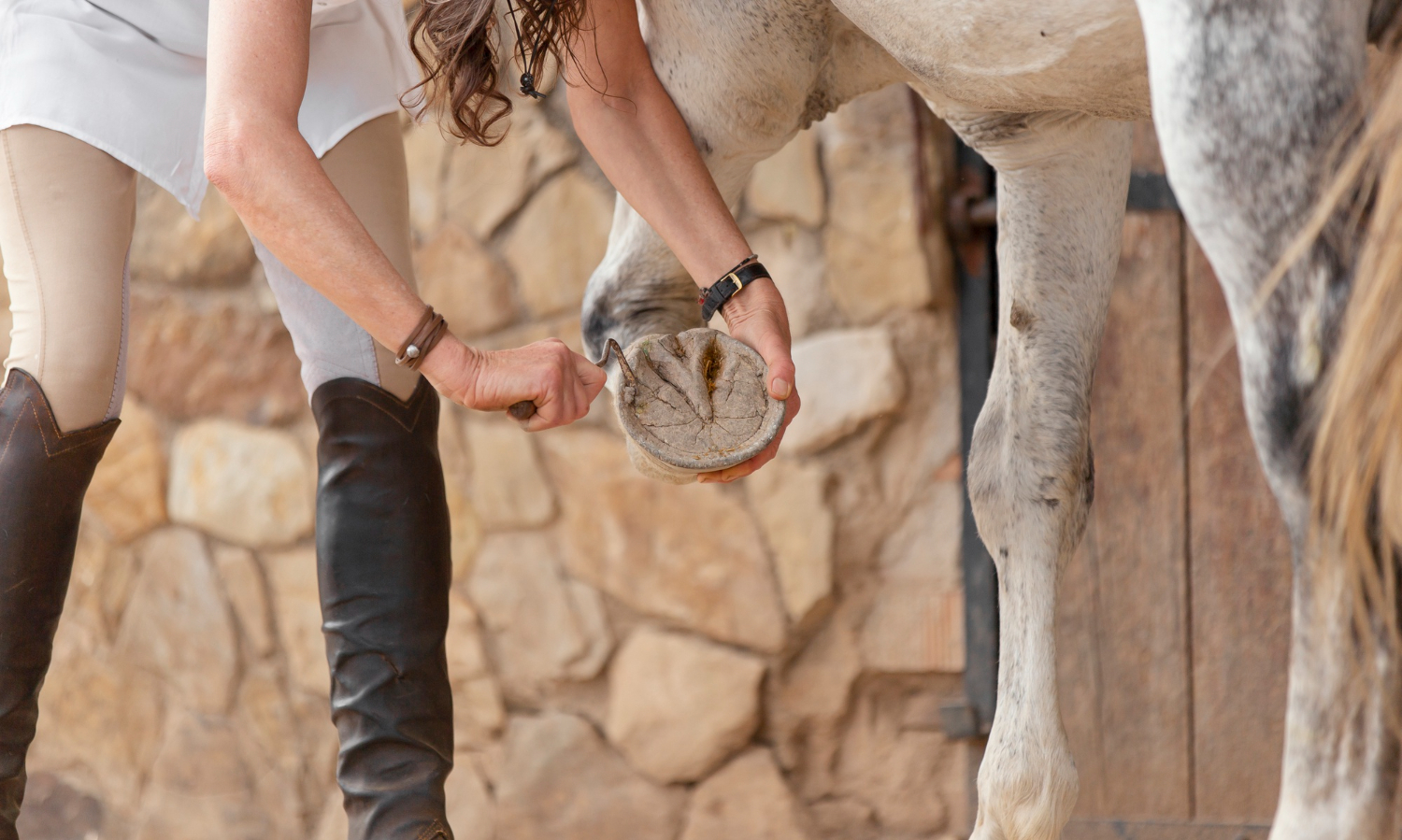
Horse hoof abscess pictures can help owners recognize drainage sites and affected areas. However, veterinary examination remains essential for accurate diagnosis and appropriate management.
Causes of Hoof Abscess in Horses
When owners understand what may contribute to hoof abscesses in horses, they are better prepared to support and maintain hoof health. A number of factors may be involved:
- Puncture wounds from nails, screws, or sharp objects create direct pathways for bacterial entry through the sole or frog.
- White line disease or separation allows bacteria to enter through the compromised junction between the hoof wall and sole.
- Sole bruises from stones or hard ground create tissue damage that facilitates bacterial invasion.
- Hoof cracks produce fissures in the hoof wall that provide entry points for pathogens.
- Prolonged wet environmental conditions soften hoof structures and increase susceptibility to bacterial penetration.
- Alternating wet-dry cycles cause hoof expansion and contraction that creates separations bacteria can exploit.
- Horses with genetically thin soles or worn sole thickness show increased vulnerability. Research demonstrates that poor hoof trimming practices, particularly intervals exceeding 3 months, correlate with 38.42% higher lameness rates in affected horses. Small stones can work upward through the white line in gravel abscesses.
- Previous laminitis episodes compromise hoof structures and increase abscess risk.
Diagnosing Horse Hoof Abscess
A complete diagnosis depends on a thorough veterinary examination.
- Hoof testers are used as the main diagnostic tool; applying pressure reveals the painful area. The digital pulses are checked to detect an increase in pulse intensity in the affected foot.
- Veterinarians check the temperature of the hoof, and radiographs are taken to exclude fractures, foreign bodies, or eventual involvement of bones. Thermography might detect patterns of inflammation.
- Exploratory paring is done very carefully in order to remove layers of the sole for locating and draining the abscess tract.
Professional diagnosis helps confirm the cause and rules out similar conditions, including laminitis or fractures.
Also Read: Essential Vitamins and Minerals for Promoting Horse Health
Treatment for Horse Hoof Abscess
The goals for effective management of horse hoof abscesses are to establish drainage and control infection:
Establishing Drainage
Treatment starts when the veterinarian or farrier finds and opens the abscess tract. It is this indicated pathway that allows the buildup of infection and pressure to finally drain out of the hoof, enabling the horse to experience comfort.
The practitioner carefully removes a small amount of hoof material to allow natural drainage while avoiding excessive removal that may weaken the hoof. Many horses may show noticeable changes in comfort once pressure is released under professional guidance.
Soaking and Poulticing
Daily Epsom salt soaks in a warm water solution for 20-30 minutes, twice daily, draw out infection and reduce inflammation.
Poulticing with ichthammol or commercial hoof poultices favors continued drainage. These keep the structure moist, thus creating an antimicrobial environment that encourages healing while softening tissues around the abscess tract.
Protective Wrapping
Bandaging keeps the area clean and protects it from environmental contamination while healing. Wraps need daily changes or more frequent replacement as instructed by veterinarians.
Waterproof materials allow for limited turnout while preventing recontamination. Clean, dry bandaging helps control secondary infections during the healing process.
Pain Management
Pain and inflammation are managed using NSAIDs such as phenylbutazone or flunixin meglumine. The majority of horses will still require analgesic treatment for the first 24 to 48 hours after drainage is established.
Treatment Duration Factors
Research reveals significant variability in healing timelines based on specific factors. Studies show summer-diagnosed abscesses require longer treatment than those diagnosed in other seasons.
These findings emphasize the importance of seasonal awareness and early intervention.
Hoof Care Tips for Comfort and Strength
Regular hoof trimming every three months or less may help support overall hoof health. Daily cleaning to remove debris can help maintain comfort and identify occasional issues early. Providing a clean, dry environment may also support healthy hooves.
Horses with thinner soles or those walking on rocky surfaces may benefit from wearing protective boots to support comfort and reduce pressure. Keeping hooves balanced helps distribute weight evenly, promoting overall hoof strength. Limiting prolonged exposure to moisture may also help maintain the integrity of hoof tissues.
Horses with weaker hooves or thin walls may also benefit from adding a hoof support supplement containing ingredients like biotin, methionine, and lysine to support overall hoof health.
After a hoof concern has resolved, regular check-ups may help monitor hoof health and catch any new issues early. Addressing underlying concerns, such as hoof balance or conformation, may further support long-term hoof wellbeing. Ensuring horses are up to date with tetanus vaccination after any hoof puncture provides an additional layer of safety.
Also Read: Hoof Health & the Performance Horse
Final Thoughts
Horse hoof abscesses are a common condition that can cause sudden lameness but generally respond well to timely professional care, reassuring owners. Awareness of the signs, contributing factors, and supportive care approaches can help owners respond appropriately and maintain overall hoof comfort.
Supporting your horse’s hoof health is an ongoing process, and having access to reliable products and guidance can make a meaningful difference. With over 40 years of experience supporting equine wellbeing, Med-Vet Pharmaceuticals provides high-quality solutions formulated to maintain hoof integrity and comfort.
For further information on supporting hoof health and mobility, visit www.medvetpharm.com or contact our team at 833-809-4848.
Location: 14101 W 62nd St, Eden Prairie, MN 55346
FAQs
Q1. What factors may contribute to hoof abscesses?
Ans. Hoof balance, debris accumulation, moisture, seasonal changes, and walking on rough surfaces may all play a role.
Q2. What should I do if my horse shows lameness?
Ans. Seek professional evaluation promptly. Early attention may help support comfort and guide appropriate hoof care.
Q3. How long does it take for a hoof to improve?
Ans. Many horses show improvement within a week once pressure is relieved and supportive care is provided, though occasional monitoring is recommended.
