
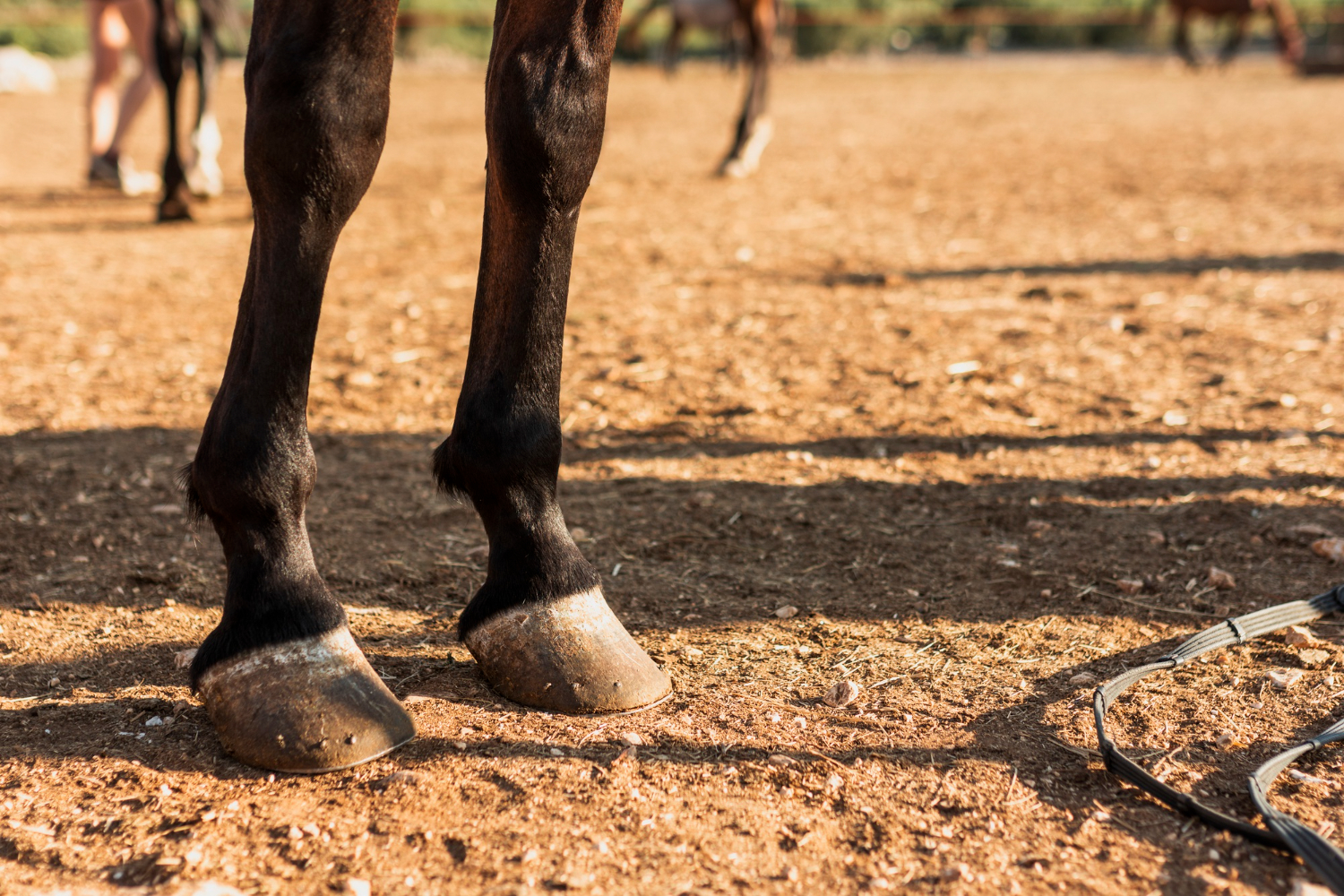
TL;DR
- The pastern is the area between your horse's hoof and fetlock. It plays a fundamental role in movement and shock absorption.
- Common horse pastern problems include ringbone, osteoarthritis, fractures, and tendon strain.
- Early detection, combined with proper veterinary care, corrective shoeing, and targeted nutrition, can improve outcomes.
- Key supplements containing glucosamine, chondroitin sulfate, and MSM may support overall cartilage health and strengthen connective tissue for long-term support.
Why Pastern Health Matters
The pastern, located between your horse’s hoof and fetlock, may seem small, but its role in overall soundness is enormous. Every stride sends tremendous force through this area, absorbing shock and enabling smooth, fluid movement. When your horse moves comfortably, the pastern often goes unnoticed, but when problems arise, the effects can be sudden, limiting, and serious.
Fortunately, many horse pastern problems respond well to early intervention, proper care, and proper nutritional support. Understanding what can go wrong and how to support recovery empowers you to keep your horse sound, comfortable, and performing at their best.
Understanding the Pastern Structure in Horses
Your horse’s pastern consists of two primary bones. These bones link the cannon bone (located in the lower leg above the pastern) to the coffin bone inside the hoof, creating a vital hinge that helps absorb impact, distribute force, and maintain fluid motion during each step.
Every time your horse's hoof strikes the ground, the pastern acts as a natural shock absorber. This makes it essential for athletic performance. However, it is also vulnerable to injury and degenerative changes, especially in horses with demanding workloads or conformational challenges.
Common Pastern Problems in Horses
Several conditions can affect the pastern, including inflammatory diseases and traumatic injuries. Recognizing the signs early gives you the best chance at effective management and recovery. Below are some of the most common pastern problems in horses.
Ringbone
Ringbone is a form of arthritis that affects the pastern joints of horses. It develops when new bone growth forms around the joint, leading to pain, swelling, and immobility.
Horses involved in high-impact work or those with upright conformation face a higher risk. You may notice a shortened stride, heat around the pastern, and lameness that worsens with exercise.
Pastern Dermatitis
Also known as mud fever, pastern dermatitis is a skin condition that presents in the back of the pastern. Symptoms include scabbing, crusting, swelling, and pain when touched.
Without treatment, this condition can escalate to chronic lameness and deep infections that compromise tissue integrity.
Osteoarthritis
Osteoarthritis occurs when cartilage deteriorates over time, resulting in bone-on-bone contact within the pastern joints.
This leads to inflammation, pain, and reduced mobility. Horses with osteoarthritis often show stiffness after rest, reluctance to move, and visible joint swelling. These are all signs of pastern joint pain in horses.
Pastern Fractures
Fractures of the long or short pastern bones can result from trauma, a misstep, or repetitive stress.
These injuries typically cause sudden, severe lameness and require prompt veterinary consultation to prevent further damage and assess treatment options.
Sidebone
Sidebone occurs when the flexible cartilage on either side of the coffin bone ossifies, turning into bone.
While some horses remain asymptomatic, others experience lameness, particularly on hard surfaces. The pastern area may also feel firmer or less flexible than normal.
Windgalls (Windpuffs)
Windgalls are soft, fluid-filled swellings that appear around the pastern and fetlock.
Though usually cosmetic and painless, they can indicate stress on the supporting structures of the pastern, especially in horses with heavy workloads.
Tendon and Ligament Strain
Overuse, sudden movements, or poor footing can strain or partially tear the tendons and ligaments around the pastern.
This results in swelling, heat, and lameness. Horses with long pasterns are particularly vulnerable, as the increased pastern angle places additional strain on soft tissues.
Conformation-Related Issues
Both long, sloping pasterns and short, upright pasterns can predispose horses to injury. Long pasterns increase strain on tendons and ligaments, raising the risk of bows and strains.
Short pasterns reduce shock absorption and increase joint stress, elevating the risk of fractures and arthritis. Either conformation can affect long-term soundness.
Management and Treatment Options
Once you identify horse pastern problems, working closely with your veterinarian becomes essential. Treatment plans vary based on severity and diagnosis, but they often include the following core strategies.
- Rest and controlled exercise may help manage inflammation and prevent further injury. Prescribed anti-inflammatory medications may also aid in the management of pain and swelling.
- Corrective shoeing improves hoof balance and reduces stress on the pastern.
- In more chronic or severe cases, joint injections or surgical intervention may be necessary.
- Cold therapy and physical rehabilitation can also support healing.
The Role of Supplements in Pastern Health
Targeted nutrition can help support the body's natural healing processes and help support normal joint function long-term.
Joint Support Ingredients that may lend support
Glucosamine, chondroitin sulfate, and MSM (methylsulfonylmethane) are common ingredients to help support normal joint function.
- Glucosamine can provide the raw material needed to help build and repair cartilage that cushions the bones within the pastern joint.
- Chondroitin helps maintain cartilage flexibility and helps inhibit enzymes that break down joint tissue.
- Omega-3 fatty acids can help support normal inflammatory markers throughout the body.
- Turmeric, which contains curcumin, has properties to support a normal inflammatory response and help manage oxidative stress.
- Hyaluronic acid helps supports joint lubrication within the joint.
Also Read: 5 Common Horse Hoof Problems: Diagnosis & Treatment
Antioxidants and Mineral Support
These nutrients may help support overall tissue recovery as your horse returns to work.
- Vitamin E and selenium are natural antioxidants that may protect cells from damage during the healing process.
- Copper can help support the formation of strong connective tissue and is often included in joint formulas for horses with structural weaknesses.
Support Your Horse's Pastern Health Today With Med-Vet Pharmaceuticals
Your horse deserves to move comfortably and confidently, free from the limitations that horse pastern problems can create. At Med-Vet Pharmaceuticals, we specialize in high-quality supplements designed to support health and performance for your horses.
As a founding member of the National Animal Supplement Council (NASC), we uphold the highest standards in our premium horse supplements. Our products are suitable for horses of all ages and activity levels. From joint support for pastern issues to electrolyte paste for horses in Eden Prairie, MN, our experts can help you make the right choice.
Explore our full range at www.medvetpharm.com. For more advice, reach out at 833-809-4848.
FAQs
Q1. What are the first signs of horse pastern problems?
Early signs include mild lameness, stiffness after rest, heat or swelling around the pastern, a shortened stride, or reluctance to move on hard ground. Some horses also show sensitivity when you touch or lift the pastern area.
Q2. Can pastern issues cause permanent lameness?
Severe ringbone or untreated fractures can lead to permanent lameness if not managed properly. However, early diagnosis, proper veterinary care, and ongoing supportive measures can help control many conditions effectively.
Q3. Which supplements can help lend support for tendons and ligaments in the pastern area?
Look for supplements containing collagen peptides, MSM, glucosamine, and vitamin C. These ingredients may support connective tissue repair and help support normal tendon and ligament function.
