
What is the Equine Microbiome?
Understanding Your Horse’s Digestive System
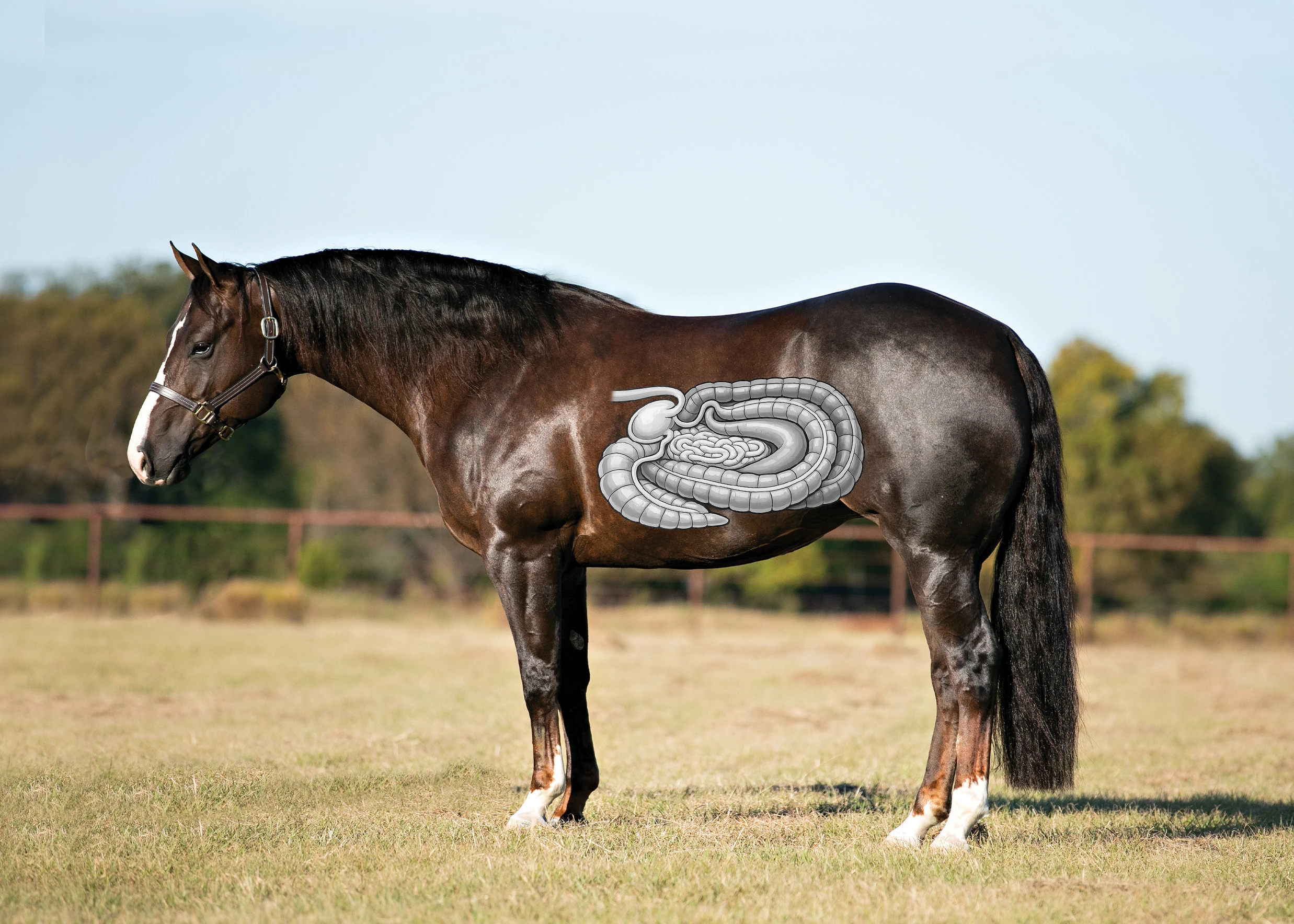
The horse’s digestive system is often divided into two main sections: the foregut and the hindgut. The foregut includes the stomach and small intestine, where feed is broken down and nutrients are absorbed. The hindgut includes the cecum and colon, where microbes ferment fiber and produce energy the horse can use.
The equine microbiome refers to the population of microbes living within this system. These microbes play a central role in how feed is broken down, how nutrients are utilized, and how a stable gut environment is maintained. Understanding how these two systems work together is key to understanding the equine microbiome.
The Horse’s Digestive System
The Stomach
A horse’s stomach is relatively small, about the size of a large football, holding roughly 2 gallons. It produces gastric acid continuously, around 12-14 gallons per day, whether the horse is eating or not. When a horse has consistent access to forage, saliva production helps buffer much of this acid. Without it, excess acidity can irritate the stomach lining and can increase the risk of gastric ulcers. Feed moves through the stomach quickly, typically within 15 to 45 minutes, so very little microbial activity occurs here due to the highly acidic environment.
The Small Intestine
The small intestine is approx. 70-80 feet long and is lined with millions of tiny, hair-like structures called villi that absorb nutrients from the diet into the bloodstream. The beneficial microbes also known as the “good bacteria” (Bacillus and Lactobacillus) compete for space along the intestinal lining/villi. When present in adequate numbers, they help crowd out potential pathogens, a process called competitive inhibition.
Beta glucans, derived from the cell walls of yeast culture, act as a prebiotic or nutrient source for beneficial microbes. They also bind to macrophages within the gut lining, activating key immune cells that signal the body to produce white blood cells, the body’s first line of defense against everyday challenges.
Feed may remain in the small intestine for up to 3-5 hours. Most starches and carbohydrates are meant to be digested here. When excess starch escapes digestion, it passes into the hindgut (cecum) and disrupt microbial balance.
The microbes in the hindgut are primarily designed to digest fiber, not starch. When large amounts of starch reach this area, it can alter the gut environment, leading to microbial die-off, acidosis, and potentially hindgut ulcers.
The Cecum (Hindgut Fermentation)
The cecum is the beginning of the hindgut and acts as a fermentation vat, holding 7-10 gallons of material. This is where billions of fiber-digesting microbes live, including bacteria and beneficial yeast. This is also where a large portion of the equine microbiome resides and functions.
This fermentation process continues through the rest of the hindgut. Feed can remain in the hindgut for an extended period, sometimes up to 36 hours, making microbial balance critical. When this system is functioning properly, fiber is efficiently digested and the gut environment remains stable.
The Role of the Microbiome
The horse’s digestive system is designed to process forage continuously, relying on a delicate balance of microbes at every stage. Because the microbiome plays such a central role in digestion, its balance directly impacts how the entire horse functions. From breaking down fiber in the hindgut to supporting nutrient absorption and maintaining a stable gut environment, these microbes influence more than just digestion.
From start to finish, the digestive process can take anywhere from 24 to 72 hours, with most fermentation happening in the hindgut. When this system is properly supported, horses are better able to maintain consistency, utilize nutrients effectively, and stay resilient through the demands of training, travel, and performance.
Supporting the Microbiome
Supporting this system starts with creating the right environment for beneficial microbes to thrive. Consistent access to forage, proper feeding management, and minimizing sudden dietary changes all play a role in maintaining microbial balance.
In addition to management, targeted nutritional support can help reinforce this system. Ingredients like prebiotics, probiotics, and postbiotics are designed to support microbial populations in different ways.
Prebiotics: Mannans & beta-glucans (Agrimos) provide a nutrient source for beneficial microbes. Components like mannans and beta-glucans help drive the production of short-chain fatty acids, which are critical for gut barrier integrity. Beta-glucans also interact directly with immune cells, increasing immune activity and supporting the body’s ability to respond to challenges.
Probiotics: S. boulardii CNCM I-1079, S. cerevisiae CNCM I-1077, B. subtilis & B. licheniformis are live microorganisms that populate the gut and contribute to a balanced microbial environment. These beneficial microbes help strengthen the intestinal lining, promote mucus production, and compete with undesirable bacteria, helping prevent them from gaining a foothold in the gut.
Postbiotics: (Agrimos) are non-living yeast-derived components. They help strengthen the gut barrier, bind to toxins for removal, contribute to a balanced hindgut pH, and provide antioxidant support within the gut environment.
Together, these components work to support a resilient microbiome, which plays a central role in digestion, nutrient utilization, and immune function.
